
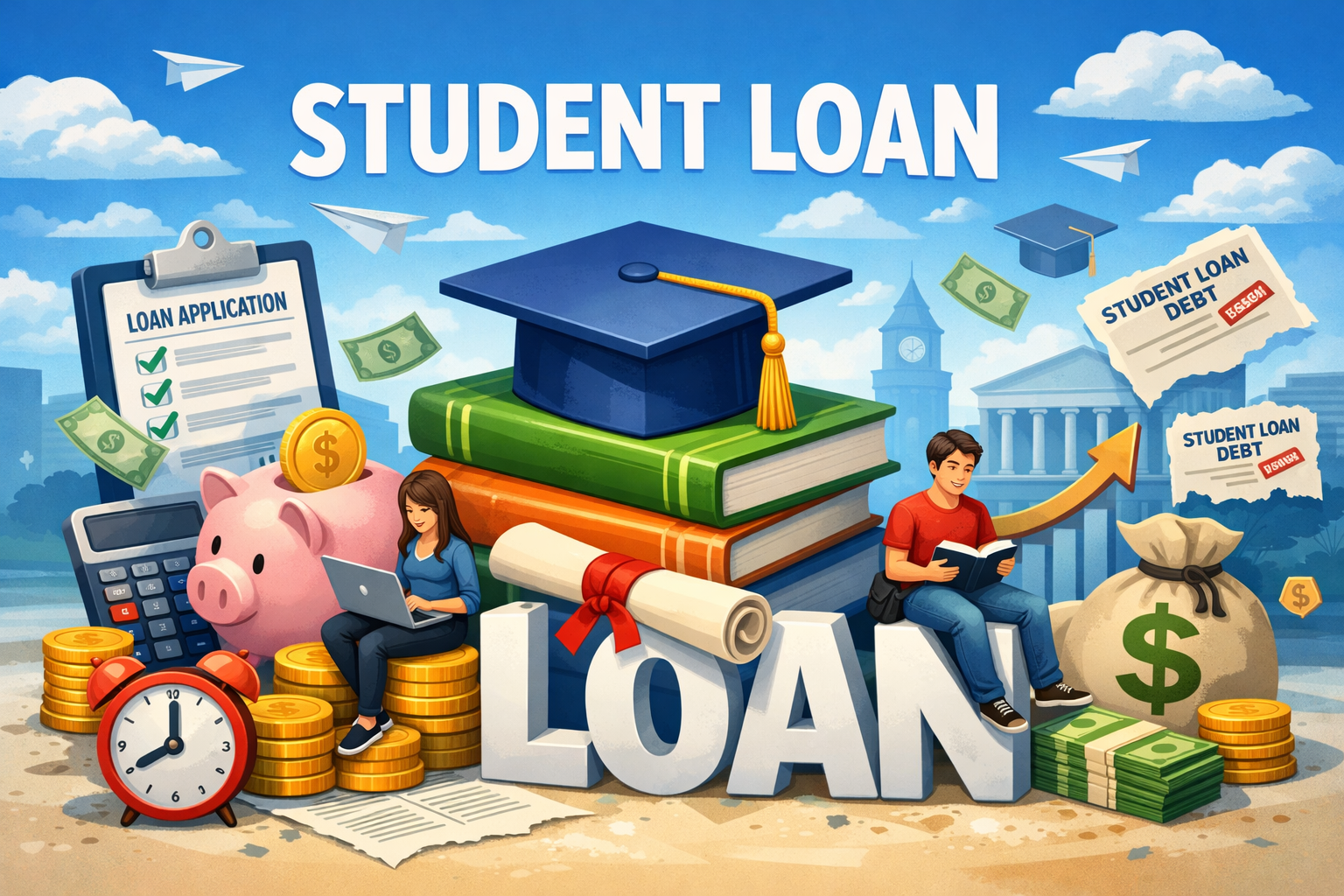
Learn how a student loan works, types, interest rates, repayment tips, and smart borrowing strategies to manage your education finances effectively.
Table of Contents
Introduction
Higher education is one of the most important investments you can make, but it often comes with a significant financial burden. That’s where a student loan becomes relevant. Whether you’re planning to study in India or abroad, understanding how student loans work can help you make smarter financial decisions.
In this guide, we’ll break down everything you need to know about student loans, including types, eligibility, repayment strategies, and common mistakes to avoid. The goal is simple: help you fund your education without creating unnecessary financial stress later.
1. What is a Student Loan and How Does It Work?
A student loan is a type of financial assistance designed to help students cover education-related expenses like tuition fees, accommodation, books, and travel.
Unlike scholarships, student loans must be repaid, usually with interest. However, they come with flexible repayment terms, often starting after you complete your education.
Key Features:
- Covers tuition, living expenses, and more
- Lower interest rates compared to personal loans
- Moratorium period (repayment starts after course completion)
- Tax benefits under certain conditions
📊 Stat Insight:
- Over ₹1.2 lakh crore in education loans are currently outstanding in India (RBI data).
- Nearly 60% of students rely on loans or financial aid globally.
2. Types of Student Loans Available
Not all student loans are the same. Choosing the right one can save you a lot of money.
a) Government Student Loans
Offered by public sector banks under government schemes.
- Lower interest rates
- Subsidy options for eligible students
- Easier repayment terms
b) Private Student Loans
Provided by private banks or NBFCs.
- Faster approval
- Higher loan limits
- Slightly higher interest rates
c) Secured vs Unsecured Loans
- Secured Loan: Requires collateral (property, FD, etc.)
- Unsecured Loan: No collateral but stricter eligibility
📊 Stat Insight:
- Around 70% of education loans in India are secured loans.
- Interest rates typically range from 8% to 14% annually.
3. Eligibility Criteria for Student Loans
Before applying, it’s important to understand what lenders look for.
Common Requirements:
- Admission to a recognized institution
- Good academic record
- Co-applicant (usually parent/guardian)
- Income proof of co-applicant
- Collateral (for higher loan amounts)
📊 Stat Insight:
- Loan approval rates increase by 40% when a strong co-applicant is involved.
Pro Tip:
Choose institutions recognized by banks, as it improves approval chances and may offer better interest rates.
4. Interest Rates and Hidden Costs
Interest is the most critical factor in any student loan.
Types of Interest Rates:
- Fixed Rate: Remains constant
- Floating Rate: Changes with market conditions
Additional Costs to Watch:
- Processing fees (0.5%–2%)
- Prepayment charges (sometimes waived)
- Late payment penalties
📊 Stat Insight:
- A 1% increase in interest rate can raise your total repayment by up to 10–15% over the loan tenure.
Smart Tip:
Always compare at least 3 lenders before choosing your student loan.
5. Repayment Strategies That Actually Work
Repaying a student loan doesn’t have to be stressful if you plan properly.
Effective Repayment Tips:
- Start paying interest during the study period
- Choose shorter tenure if possible
- Use EMI calculators before borrowing
- Make partial prepayments when possible
Example Strategy:
- Loan Amount: ₹10 lakh
- Interest Rate: 10%
- Tenure: 10 years
Paying just ₹2,000/month during study can reduce total interest by ₹1–2 lakh.
📊 Stat Insight:
- Borrowers who start early repayment reduce their loan burden by up to 25%.
6. Real-Life Example: Smart Borrowing in Action
Let’s look at a practical case.
Case Study: Rahul’s Education Loan
Rahul took a ₹15 lakh student loan to study abroad.
What he did right:
- Compared 4 lenders before choosing
- Opted for a secured loan at 9% interest
- Paid simple interest during the course
- Started EMI immediately after placement
Outcome:
- Saved nearly ₹3 lakh in total interest
- Cleared loan in 7 years instead of 10
This shows that a student loan isn’t just about borrowing. It’s about managing it wisely.
Conclusion
A student loan can open doors to better education and career opportunities, but it needs to be handled with care. From choosing the right loan type to planning repayment, every decision impacts your financial future.
Key Takeaways:
- Always compare lenders before applying
- Understand interest rates and hidden charges
- Start repayment early if possible
- Borrow only what you truly need
👉 Call to Action:
Before applying for a student loan, take time to calculate your repayment capacity and explore all available options. A well-planned loan today can save you years of financial stress later.
FAQs About Student Loan
1. What is the maximum amount I can get as a student loan?
It depends on the lender and course. In India, it can go up to ₹1 crore for international studies.
2. Do I need collateral for a student loan?
Loans above ₹7.5 lakh usually require collateral.
3. When does repayment start?
Typically after course completion plus a 6–12 month grace period.
4. Can I repay my student loan early?
Yes, most lenders allow prepayment, often without penalties.
5. Is there any tax benefit on student loans?
Yes, under Section 80E, interest paid is tax-deductible.
6. What happens if I miss EMI payments?
It affects your credit score and may lead to penalties or legal action.
