
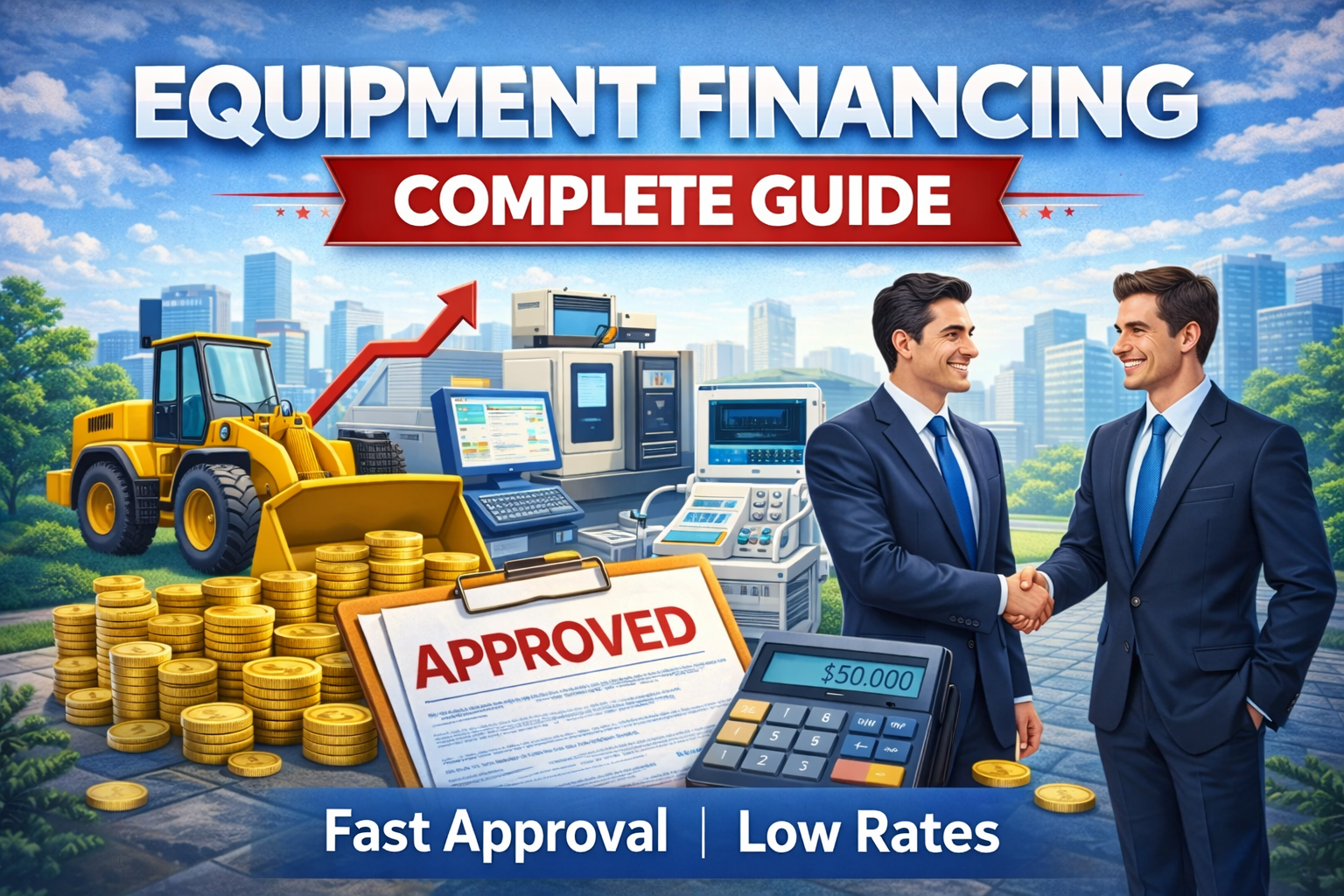
Learn everything about equipment financing, including types, benefits, interest rates, and how to apply. Discover how businesses can fund equipment easily with flexible financing options.
Table of Contents
Introduction
In today’s competitive business environment, having the right tools and machinery is essential for growth. However, purchasing equipment outright can be expensive and strain your cash flow. This is where equipment financing becomes a powerful solution.
Instead of paying a large upfront cost, businesses can spread payments over time while still accessing the equipment they need. Whether you run a startup or an established company, equipment financing can help you scale operations without financial stress.
In this guide, we will explore how it works, its benefits, types, and how to apply successfully.
What is Equipment Financing?
Equipment financing is a type of loan or lease specifically used to purchase business-related equipment such as machinery, vehicles, or technology.
The equipment itself often acts as collateral, which makes equipment financing easier to obtain compared to unsecured loans.
👉 Learn more from Investopedia:
https://www.investopedia.com/terms/e/equipment-financing.asp
How Equipment Financing Works
With equipment financing, a lender provides funds to purchase equipment, and the borrower repays the amount over a fixed period with interest.
Key Features:
- Fixed monthly payments
- Loan or lease options
- Equipment serves as collateral
- Flexible repayment terms
This structure makes equipment financing a preferred option for businesses needing immediate assets.
Types of Equipment Financing
There are two main types of equipment financing options available:
1. Equipment Loans
In this model, you own the equipment after repaying the loan.
- Fixed interest rates
- Long-term ownership
- Suitable for high-value machinery
2. Equipment Leasing
Leasing allows businesses to use equipment without owning it.
- Lower upfront cost
- Easy upgrades
- Ideal for technology equipment
👉 Compare options here:
https://www.nerdwallet.com/article/small-business/equipment-financing
Benefits of Equipment Financing
1. Preserves Cash Flow
With equipment financing, you don’t need to spend a large amount upfront.
2. Easy Approval
Since the equipment acts as collateral, lenders are more willing to approve equipment financing applications.
3. Tax Advantages
Businesses may benefit from tax deductions on financed equipment.
👉 IRS tax info:
https://www.irs.gov/businesses/small-businesses-self-employed
4. Access to Modern Equipment
Stay competitive by upgrading tools through equipment financing.
Interest Rates and Costs
The cost of equipment financing depends on several factors:
- Credit score
- Business financial health
- Equipment type
- Loan duration
Typical Rates:
- 5% to 20% annually
👉 Check latest rates:
https://www.bankrate.com/loans/business-loans/
Understanding costs helps you choose the right equipment financing plan.
Eligibility Criteria
To qualify for equipment financing, lenders usually require:
- Good credit score
- Business operational history
- Stable revenue
- Equipment details
Startups can also access equipment financing, but terms may vary.
How to Apply for Equipment Financing
Step 1: Identify Equipment Needs
Determine what equipment your business requires.
Step 2: Compare Lenders
Look at banks, NBFCs, and online platforms offering equipment financing.
Step 3: Prepare Documents
- Financial statements
- Business plan
- Tax returns
Step 4: Submit Application
Apply online or through a financial institution.
Step 5: Approval & Funding
Once approved, funds are released for purchasing equipment.
👉 Find lenders via SBA:
https://www.sba.gov/funding-programs/loans
Equipment Financing vs Traditional Loans
| Feature | Equipment Financing | Traditional Loan |
|---|---|---|
| Collateral | Equipment | External assets |
| Approval | Easier | Stricter |
| Usage | Specific | Flexible |
| Risk | Lower | Higher |
👉 Conclusion: Equipment financing is more accessible and targeted for business needs.
Industries That Benefit Most
Many industries rely heavily on equipment financing, including:
- Construction
- Healthcare
- Manufacturing
- Transportation
- Agriculture
These sectors use equipment financing to maintain productivity and growth.
Common Challenges
While beneficial, equipment financing also has some drawbacks:
- Interest costs
- Risk of equipment depreciation
- Limited flexibility compared to general loans
Understanding these risks helps you make smarter decisions.
Tips to Get Approved Faster
- Maintain a strong credit profile
- Choose the right lender
- Provide accurate financial documents
- Avoid over-borrowing
- Select equipment with strong resale value
These tips can improve your chances of securing equipment financing quickly.
Future of Equipment Financing
With fintech innovations, equipment financing is becoming:
- Faster and digital
- More accessible to startups
- AI-driven for quick approvals
Online platforms are simplifying the entire process, making equipment financing more efficient than ever.
Conclusion
Equipment financing is a smart and strategic way for businesses to acquire essential tools without straining their finances. By spreading costs over time, companies can maintain cash flow while investing in growth.
Whether you choose a loan or lease, understanding the process and options will help you make the best decision. With proper planning, equipment financing can be a key driver of long-term business success.
Learn everything about term loans, including types, benefits, interest rates, and how to apply. Discover how term loans help businesses grow with structured repayment plans.
