
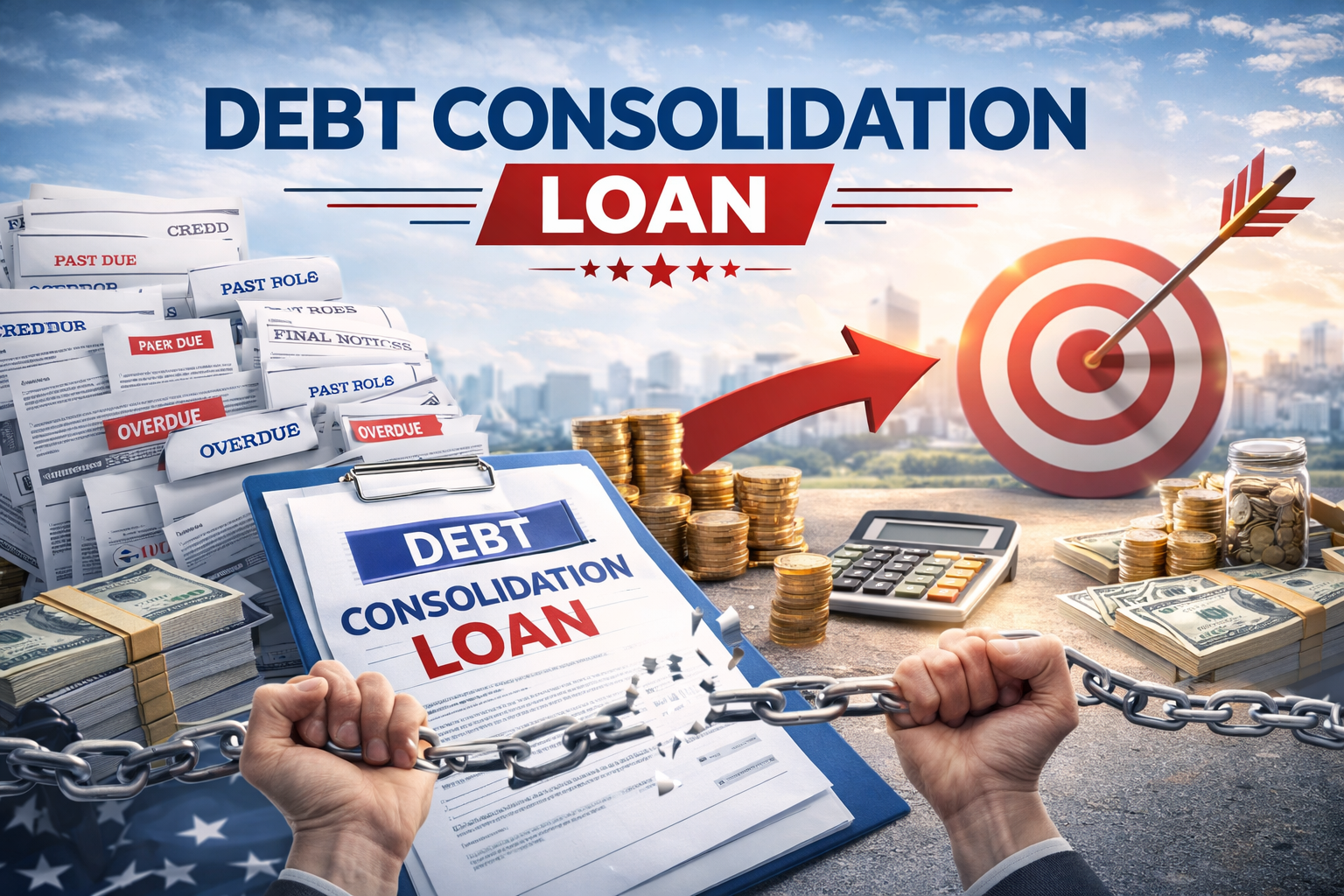
Debt Consolidation Loan: Simplify your finances with a debt consolidation loan. Learn how it works, benefits, risks, and tips to choose the right loan for faster debt payoff.

Table of Contents
Introduction
If you’re juggling multiple debts—credit cards, personal loans, EMIs—it can feel overwhelming. Different due dates, interest rates, and lenders make it hard to stay on track. That’s where a debt consolidation loan comes in.
A debt consolidation loan allows you to combine all your existing debts into a single loan with one monthly payment. The goal is simple: reduce stress, potentially lower your interest rate, and help you pay off debt more efficiently.
In this guide, you’ll learn how debt consolidation works, when it makes sense, its pros and cons, and how to choose the right option for your situation.
1. What Is a Debt Consolidation Loan?
A debt consolidation loan is a financial tool that combines multiple debts into one single loan. Instead of paying several creditors, you only deal with one lender.
How it works:
- You take a new loan
- Use it to pay off existing debts (credit cards, personal loans, etc.)
- Repay the new loan in fixed monthly installments
Why people choose it:
- Simplifies payments
- Potentially lowers interest rates
- Reduces financial stress
Stat Insight:
- Around 60% of borrowers use consolidation loans to manage high-interest credit card debt.
2. Key Benefits of Debt Consolidation Loans
Debt consolidation isn’t just about convenience. It can offer real financial advantages if used correctly.
Major benefits:
- Lower Interest Rates
Many credit cards charge 30%–45% annual interest, while personal loans may offer rates as low as 10%–18%. - Single Monthly Payment
Easier to manage and reduces missed payments. - Improved Credit Score (Long Term)
Consistent payments can boost your credit score over time. - Faster Debt Repayment
Structured repayment plans help you stay disciplined.
Stat Insight:
- Borrowers who consolidate debt can reduce their interest costs by up to 40% depending on their profile.
3. Types of Debt Consolidation Options
Not all consolidation methods are the same. Choosing the right one depends on your financial situation.
Common options include:
- Personal Loan
- Most popular option
- Fixed interest rate and tenure
- Balance Transfer Credit Card
- Low or 0% interest for a limited period
- Best for short-term repayment
- Home Equity Loan
- Lower interest rates
- Risky as your home is collateral
- Debt Management Plan (DMP)
- Managed by credit counseling agencies
- Structured repayment plans
Stat Insight:
- Personal loans account for nearly 70% of all debt consolidation solutions globally.

4. When Should You Consider a Debt Consolidation Loan?
Debt consolidation isn’t always the right move. Timing and financial discipline matter.
Consider it if:
- You have multiple high-interest debts
- Your credit score qualifies for a lower interest rate
- You’re struggling to manage multiple payments
- You want a clear repayment timeline
Avoid it if:
- You continue to accumulate new debt
- The new loan has a higher interest rate
- You lack a stable income
Stat Insight:
- Nearly 35% of borrowers fail to benefit from consolidation due to continued overspending.
5. Real-Life Example: How Debt Consolidation Helps
Let’s look at a simple case.
Case Study:
Rahul has:
- ₹2,00,000 credit card debt at 36% interest
- ₹1,00,000 personal loan at 18% interest
Total: ₹3,00,000
Monthly payments are high and scattered.
After consolidation:
- Takes a ₹3,00,000 loan at 14% interest
- Fixed EMI over 3 years
Result:
- Lower monthly payment
- Saves significant interest
- Easier to manage finances
Stat Insight:
- On average, borrowers save ₹20,000–₹50,000 in interest over the loan tenure through consolidation.
6. How to Choose the Right Debt Consolidation Loan
Choosing the wrong loan can make things worse. Here’s how to do it right.
Key factors to consider:
- Interest Rate
Always compare rates across lenders - Loan Tenure
Longer tenure = lower EMI but higher total interest - Processing Fees
Some lenders charge 1%–3% - Prepayment Charges
Check if you can repay early without penalties - Lender Reputation
Go with trusted financial institutions
Quick Checklist:
- Compare at least 3 lenders
- Check your credit score (700+ is ideal)
- Calculate total repayment cost
- Avoid unnecessary add-ons
Stat Insight:
- Borrowers who compare lenders save up to 15% more on total loan costs.
Conclusion
A debt consolidation loan can be a powerful tool to regain control of your finances. It simplifies your repayment process, reduces stress, and can save you money—if used wisely.
However, it’s not a magic solution. The real benefit comes when you combine consolidation with disciplined spending and smart financial planning.
Key Takeaways:
- Consolidation works best for high-interest debt
- Always aim for a lower interest rate than your current debts
- Avoid falling back into the debt cycle
Call-to-Action:
If you’re feeling overwhelmed by multiple debts, take the first step today. Compare loan options, calculate your savings, and choose a plan that puts you back in control.
